Same Kit, Four Misspellings
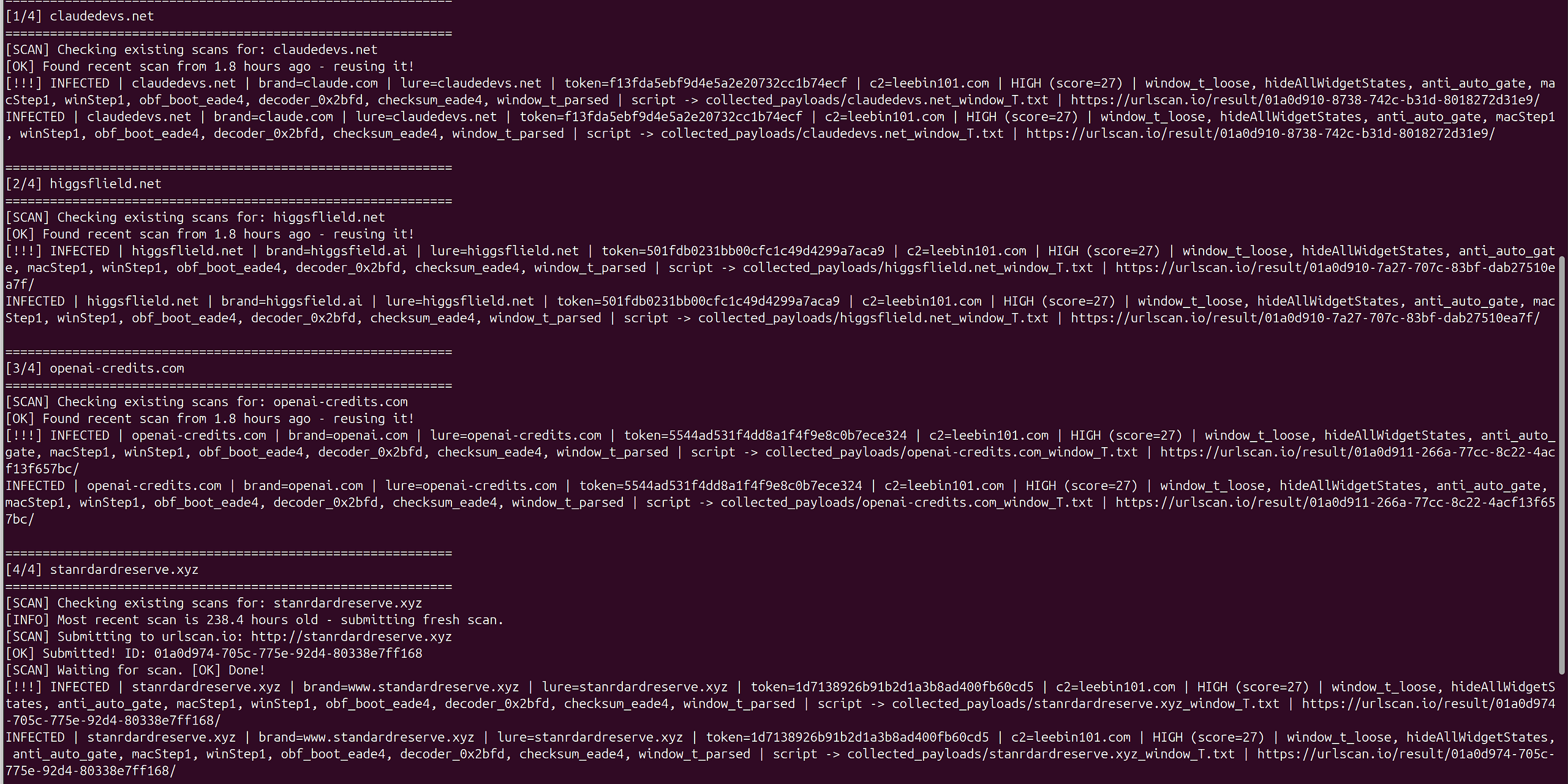
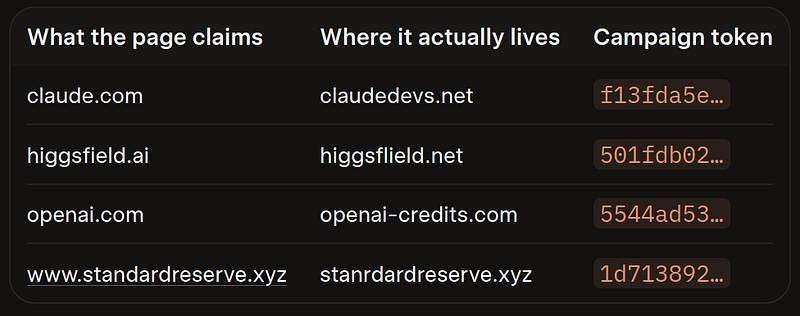
A one-hour hunt turned up four “verification” pages. Each pretends to be a different brand. All four are the same generated landing.
Why This Still Works
Nobody types higgsflield[.]net on purpose. They get there from a 302 redirect, an ad, a “document shared with you” email, or a search result that looks close enough on a phone.
The page is a fake Cloudflare “Just a moment…” widget. It tells Windows users to press Win+R and paste; Mac users get Spotlight / Terminal instructions. The pasted line is not on the page in plaintext. It sits in window.__T[2] as base64. Decode it and every lure fetches the same host: leebin101[.]com.
So the attacker only has to:
- Register a lookalike domain.
- Stamp a new brand and token into a five-slot config array.
- Keep one dropper URL.
Rebuild cost is near zero. Domain cost is a few dollars. Human pattern-matching (“that looks like Claude / OpenAI / Cloudflare”) is still cheap to abuse.
What Did Not Change
Across all four scans, the raw kit strings were identical:
window.__T = [
  hideAllWidgetStates,
  (_0y = () => _0x && _0c),
  (_0x4926, 0xeade4),
];
Same obfuscator compile. Same C2 (leebin101[.]com).
Typosquatting is not a 2005 trick that “should be dead.” It is still the cheapest way to put a familiar name in the address bar for the three seconds it takes someone to paste a command they think is a captcha.
Scan Results
Considering this has potential to spread, here are the full un-obfuscated hunt results: